
Roman Korotchin on Finextra: Decentralized Trading Is Moving Toward Open Execution Infrastructure
Introduction
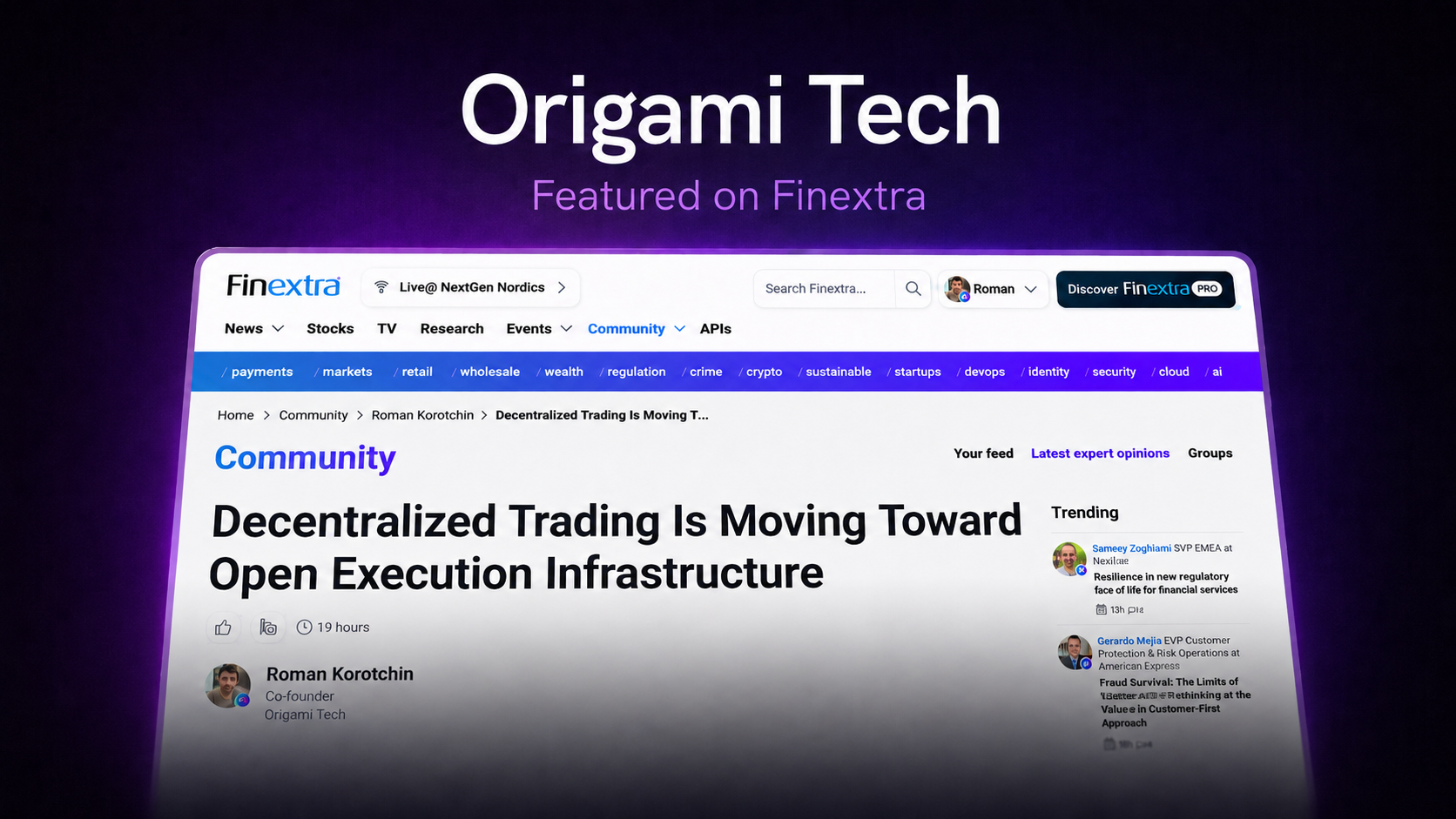
Origami Tech is featured on Finextra with a new expert column by Roman Korotchin, co-founder of the company. The article looks at how decentralized trading infrastructure is evolving from standalone liquidity venues into broader execution systems that can connect markets, automate routing, manage collateral more efficiently, and improve risk control across fragmented digital-asset environments.
Read a section of the article “Decentralized Trading Is Moving Toward Open Execution Infrastructure” below:
DEX access now extends beyond official interfaces. A protocol can remain permissionless while its main frontend applies regional restrictions, and users may still interact through builders, aggregators, APIs, alternative frontends, or direct contract calls.
This makes the access layer strategically important. Builders and interfaces shape user experience, liquidity access, routing, and regional availability. The exchange increasingly functions as a protocol surrounded by competing access layers.
The regulatory dimension of this structure is now explicit. In April 2026, the SEC’s Division of Trading and Markets issued a statement clarifying that front-end user interfaces, including websites, browser extensions, and mobile applications used to prepare user-initiated transactions in crypto asset securities, will not be required to register as broker-dealers if they satisfy specified conditions.
This structure supports ecosystem growth but also increases fragmentation. Traders need interfaces that coordinate execution, collateral, and risk across the broader trading stack, not interfaces that only display markets.
Open Execution Defines the Next Layer
The logical next step for DEX infrastructure is liquidity coordination with unified margin.
The model already exists in centralized markets: collateral sits in one custody layer, while virtual balances become available across multiple venues for execution. A trader routes each order to the venue offering the best price at that moment without pre-allocating capital across accounts.
The first decentralized platform to implement this structure through an RFQ layer, cross-venue margin, or a protocol that acts as counterparty across fragmented pools will gain a structural advantage that fee schedules and point programs cannot replicate.
Hyperliquid, Extended, Aster, Lighter, and Pacifica each solve part of the execution problem. The larger opportunity sits above individual venues: coordinating liquidity, automation, collateral, and risk across the market.
Durable advantage will come from infrastructure that lets traders keep custody while routing execution across distributed liquidity through one operational layer. Lower fees and point programs can attract attention, but the platforms that make this complexity manageable will shape the next phase of decentralized trading.
Read the full article
Finextra is a leading global platform for fintech professionals, providing trusted news, research and insights across banking, payments, capital markets and wealth. With a community of more than 40,000 senior leaders and innovators, it helps industry experts stay informed about new technologies, regulations and developments while connecting with peers online and at events.
You may also like




Discover Roman Korotchin’s expert insights on Finextra as he explores the rise of automated, multi-venue digital-asset trading and its impact on market evolution
Trade Smarter with Origami Tech
Take your crypto trading to the next level with our powerful automated trading terminal. Maximize profits, minimize risks, and stay ahead of the market 24/7.