
Execution Is Emerging as the Primary Constraint of 24/7 Markets

Introduction
Financial markets are moving toward uninterrupted trading access at a pace that increasingly exceeds the ability of execution infrastructure to keep up.
Cryptocurrency markets have functioned continuously for years, while comparable access to traditional financial assets has only recently begun to develop. In March 2026, Trade.xyz introduced the first officially licensed S&P 500 perpetual contract on Hyperliquid, allowing market participants to trade one of the world's most recognized equity benchmarks onchain at any time of day. The release marked another milestone in the gradual migration of conventional financial instruments into crypto-native trading ecosystems.
The availability of equity and commodity exposure without market-hour restrictions introduces a different set of operational demands for participants. Traders are now able to maintain positions over weekends, respond immediately to geopolitical events occurring outside exchange sessions, and adjust portfolio risk while price discovery continues around the clock. Liquidity availability, collateral allocation, funding dynamics, and execution performance therefore remain active considerations throughout the entire trading cycle.
As access to financial markets expands across an increasing number of venues, attention is gradually shifting away from simple availability. Execution quality, liquidity efficiency, and operational performance are becoming more significant as trading activity spreads across markets that never close.
Onchain Exposure to Traditional Assets Continues to Expand
Several developments throughout 2026 demonstrate the accelerating growth of onchain access to traditional financial markets.
CoinDesk reported that open interest across Hyperliquid's permissionless HIP-3 perpetual futures market reached approximately $1.2 billion, with a meaningful share of activity concentrated in tokenized equity and commodity contracts. Around the same period, the Wall Street Journal highlighted a sharp increase in trading volume tied to oil perpetual futures on Hyperliquid. During a period of geopolitical uncertainty, cumulative volume expanded from roughly $339 million to approximately $7.3 billion, illustrating sustained demand for commodity exposure that remains continuously accessible.
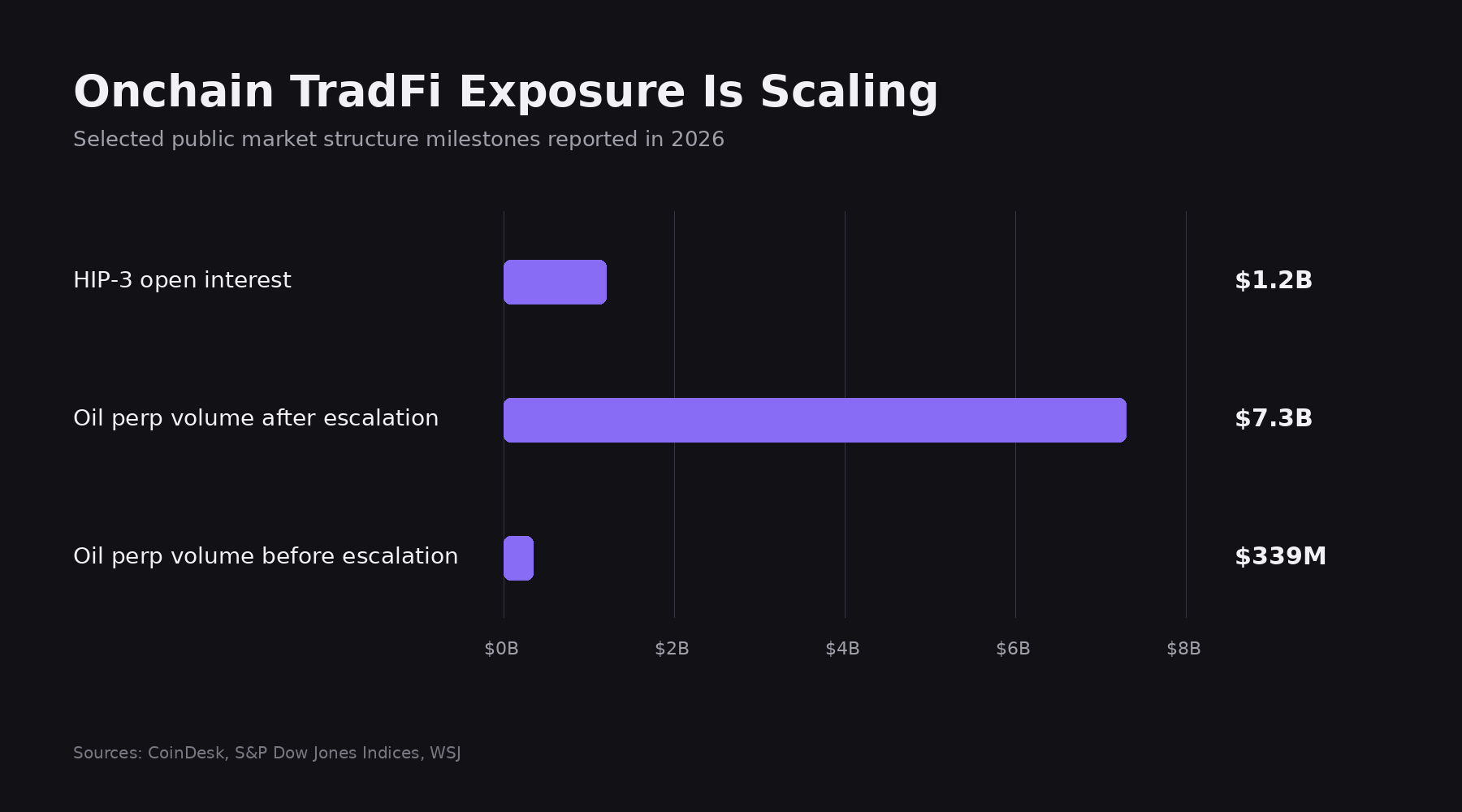
Together, these developments indicate that tokenized equities and commodities are attracting persistent market participation rather than temporary speculative interest. Rising trading volumes, expanding open interest, and a broader product lineup all point toward increasing engagement with markets that remain accessible regardless of the operating schedule of traditional exchanges.
As additional categories of financial assets migrate onchain, supporting infrastructure must evolve accordingly. Larger trading flows, greater liquidity requirements, and increasingly sophisticated approaches to risk management all require execution systems capable of operating at considerably larger scale.
Execution Quality Is Becoming a Core Performance Variable
Continuous market availability alone does not ensure efficient trading. Participants continue to depend on deep liquidity, predictable funding conditions, reliable execution, and robust mechanisms for managing portfolio risk.
A tokenized S&P 500 perpetual contract requires sufficient market depth to allow participants to open and close positions without unnecessary friction. Commodity perpetuals depend on market makers capable of maintaining competitive quotes during periods of heightened volatility. Likewise, significant directional order flow requires infrastructure able to absorb trading volume without generating excessive slippage.
For active market participants, execution quality reflects the interaction of several closely related variables, including bid-ask spreads, slippage, available market depth, funding behavior, execution latency, collateral utilization, liquidation exposure, and order-routing efficiency. Each of these factors has a direct influence on realized trading performance and becomes increasingly important as liquidity fragments across multiple venues.
At the same time, the operational effort required to monitor these variables continues to grow. Traders operating across multiple exchanges, perpetual markets, and liquidity pools must constantly assess changing market conditions while simultaneously managing positions, collateral, and execution risk in real time.
Continuous Markets Depend on Continuous Liquidity
The emergence of always-on financial markets has also reshaped the way liquidity is created and maintained.
Research published by Arrakis Finance examining Trade.xyz highlighted the increasing role of automated market-making systems within onchain order books. According to the report, platforms such as tread.fi and Origami Tech were actively supplying liquidity while preserving market depth across live trading environments. Binance Square, summarizing the same findings, noted that many of these systems primarily relied on post-only orders, allowing them to provide liquidity directly instead of consuming it.
These observations illustrate how liquidity formation is evolving across decentralized trading venues. Rather than depending primarily on discretionary market makers, order-book depth is increasingly supported by automated systems operating simultaneously across multiple venues and responding continuously to changing market conditions.
Participation in liquidity provision has expanded alongside improvements in automation frameworks, infrastructure accessibility, and cross-market connectivity. As these capabilities become more widely available, liquidity can be distributed more efficiently across different exchanges, products, and asset classes.
Automation Is Becoming Part of Core Market Infrastructure
As onchain markets continue to grow, the amount of information required for effective decision-making has increased substantially.
Funding rates across perpetual markets, spot prices, centralized exchanges, decentralized liquidity pools, collateral utilization, liquidation thresholds, incentive programs, and cross-market pricing discrepancies can all affect execution decisions. Market participants increasingly process multiple streams of information simultaneously while actively managing open positions.
Within this environment, platforms such as Origami Tech provide infrastructure designed to support automated liquidity management, inventory optimization, execution workflows, and strategy deployment across continuously operating markets. Rather than replacing trader oversight, these systems enable participants to automate predefined execution logic while retaining control over portfolio exposure and risk parameters.
A comparable shift is taking place within traditional financial markets. Tradeweb reported that automated intelligent execution represented 58% of all tickets executed on its platform during the first quarter of 2026, compared with 39% during the same period in 2022. The company also observed growing adoption of automated execution workflows during episodes of elevated market volatility.
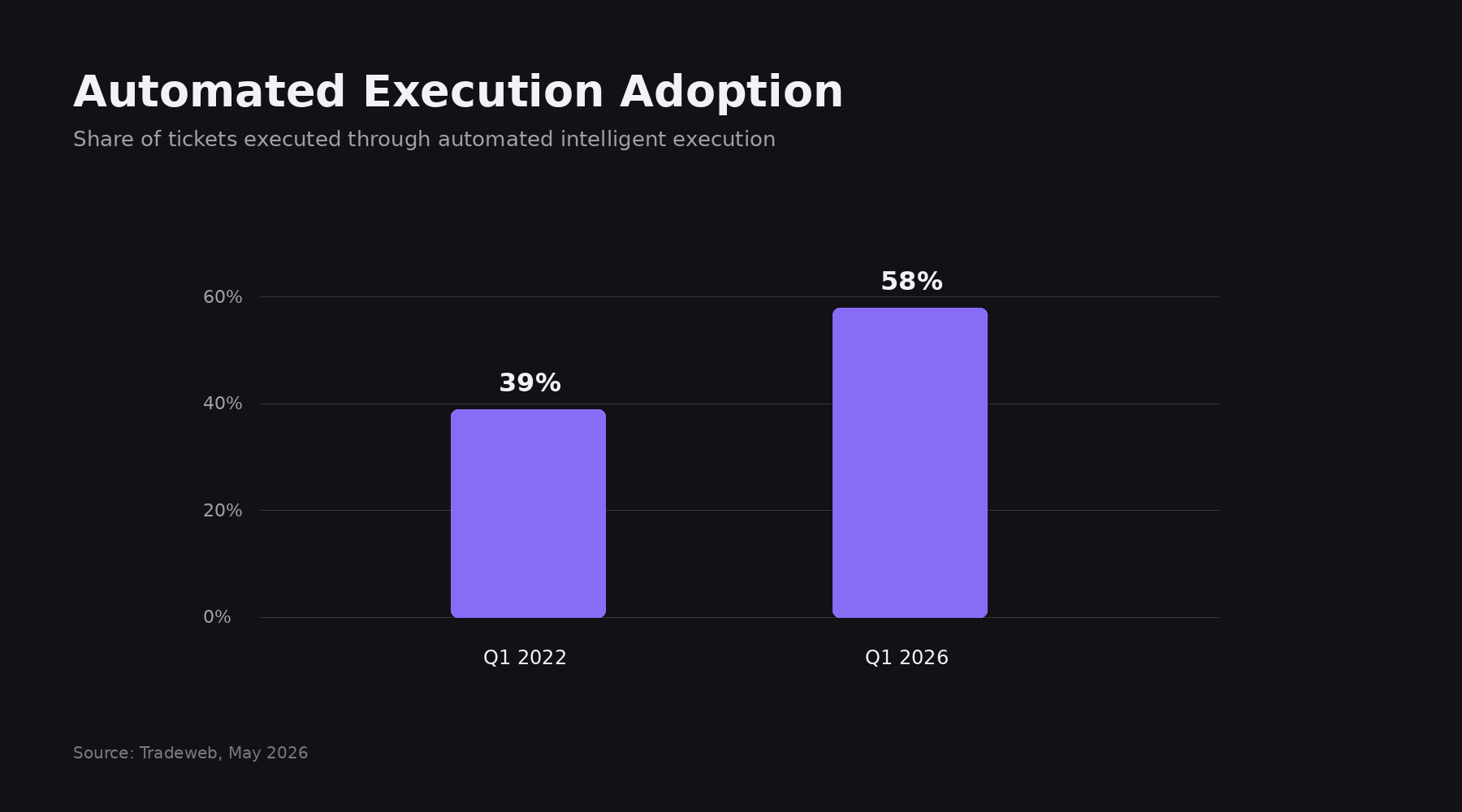
Taken together, these figures reflect a broader transformation in trading infrastructure. As financial markets become more complex, data volumes continue to increase, and execution conditions change more rapidly, demand is growing for systems capable of monitoring market activity and responding efficiently at scale.
Workflow Is Becoming a Competitive Advantage
Modern trading increasingly extends beyond the placement of individual orders.
Position surveillance, funding-rate analysis, collateral optimization, liquidation monitoring, conditional execution, inventory balancing, and coordination across multiple venues have become integral components of everyday trading operations. In markets that function without interruption, these workflows remain active throughout weekends, holidays, and periods of heightened volatility.
The continued expansion of automated liquidity provision further reinforces these operational processes. Participants can deploy systematic strategies, manage inventory across different venues, and contribute liquidity using infrastructure that has become progressively easier to access. Broader participation in liquidity provision has the potential to strengthen market depth while improving resilience across a wider range of tradable assets.
The effectiveness of these operational workflows increasingly determines how efficiently traders interact with continuously available markets and how consistently liquidity can be maintained as market conditions evolve.
Liquidity Infrastructure Is Evolving Together With Market Access
The introduction of licensed S&P 500 perpetual contracts, the rapid expansion of commodity perpetual markets, the broader adoption of tokenized traditional assets, and the growing use of automated execution all reflect a wider transformation in market structure.
Conventional financial instruments are steadily becoming available within trading environments that operate continuously and accommodate global participation. At the same time, supporting infrastructure is advancing to match this shift through new liquidity models, execution technologies, and operational frameworks designed specifically for markets that never close.
The long-term development of onchain finance will depend not only on expanding asset availability but also on the strength of the infrastructure supporting those markets. Liquidity provision, execution efficiency, risk management frameworks, and operational systems capable of functioning continuously will become increasingly important as trading activity spreads across more venues and asset classes.
As participation grows and market structure becomes more interconnected, execution will play a larger role in determining overall market efficiency. The ability to route orders effectively, maintain liquidity under changing conditions, and manage risk across multiple environments will increasingly distinguish mature trading infrastructure from basic market access.
Twenty-four-hour markets can only operate sustainably when the systems responsible for liquidity, execution, and risk management are capable of maintaining the same uninterrupted pace. As financial markets continue moving toward continuous operation, execution infrastructure is likely to become one of the defining factors shaping the next stage of market development.
You may also like


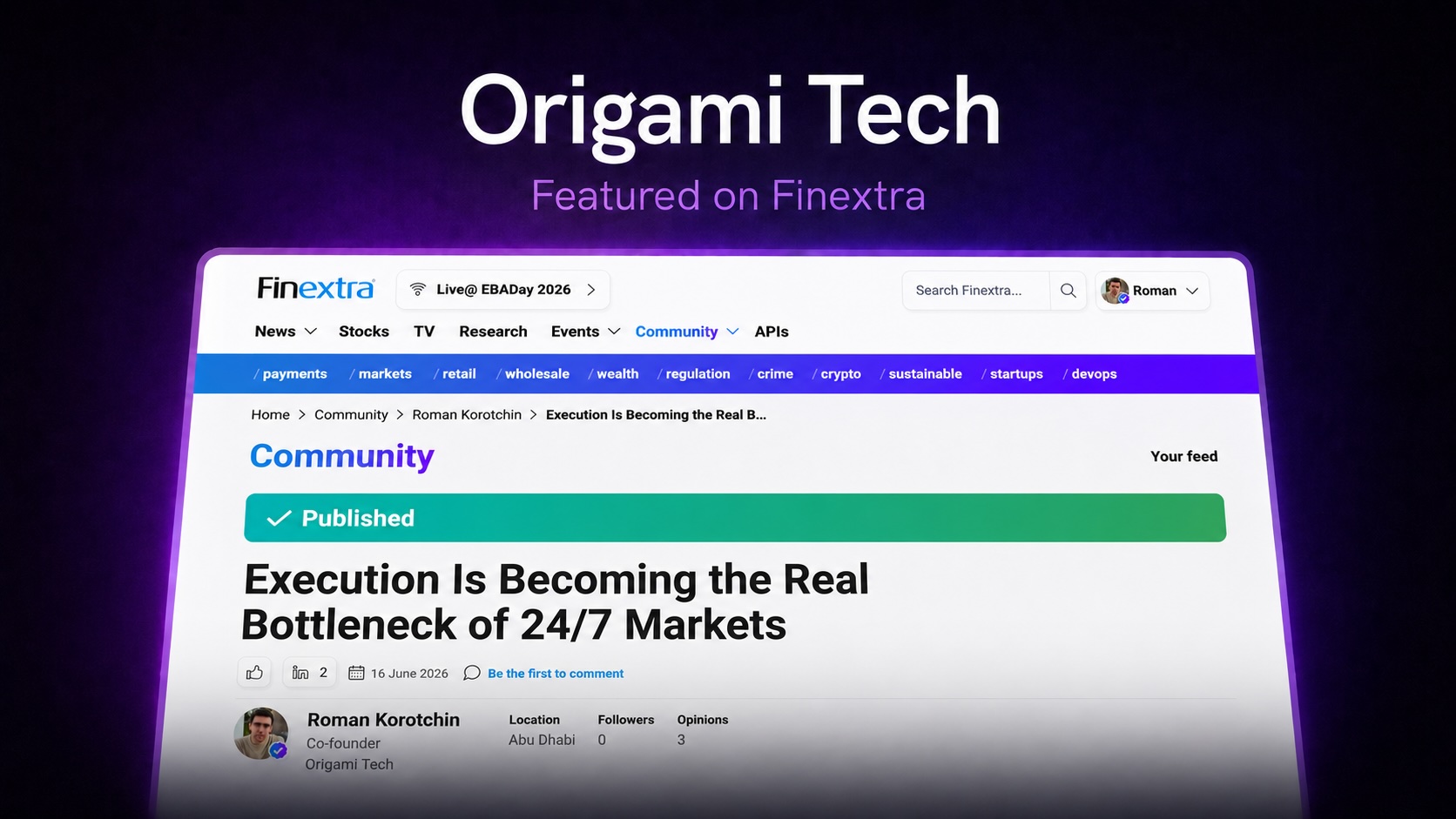


Discover Roman Korotchin’s expert insights on Finextra as he explores the rise of automated, multi-venue digital-asset trading and its impact on market evolution
Trade Smarter with Origami Tech
Take your crypto trading to the next level with our powerful automated trading terminal. Maximize profits, minimize risks, and stay ahead of the market 24/7.