
AMA Recap: Roman Korochin Joins PIPO X Space to Discuss the Future of Real-World Finance

Introduction
Real-world assets continue to move from industry narrative to practical implementation, as more projects explore how tokenization can reshape access to financial markets.
That was the focus of a recent X Space AMA hosted by PIPO, titled “RWA & Global Tokenization: Where Is It All Going?”, which brought together industry participants from PIPO, Origami Tech, and Real Finance to discuss the future of tokenized finance, infrastructure, liquidity, and adoption.
The session featured:
- Roman Wiligut, CMO at PIPO
- Roman Korotchin, Co-Founder of Origami Tech,
- Pauli, Strategic Advisor at Real Finance
The discussion explored how the RWA sector is evolving, what infrastructure is still missing, and what needs to happen for tokenized financial products to achieve broader adoption.
RWA Is Moving Into a More Practical Phase
One of the clearest takeaways from the AMA was that real-world assets are no longer being viewed simply as another crypto trend.
Across the discussion, speakers pointed to a broader shift: tokenization is increasingly being considered as infrastructure for financial access, rather than just a speculative market narrative.
From PIPO’s perspective, tokenization creates structured and compliant access to investment opportunities that were previously limited to institutional investors or highly restricted market participants.
Roman Wiligut highlighted how access to many financial opportunities, particularly private markets and pre-IPO deals, has historically been limited to institutional investors, venture firms, and high-net-worth participants. Tokenization, in this context, has the potential to broaden access for eligible global investors through more flexible investment structures.
Pauli from Real Finance added that market demand is also evolving. Investors are increasingly looking toward products tied to clearer economic value, asset backing, and sustainable financial utility rather than pure speculation.
Roman Korotchin on the Infrastructure Challenge Behind Tokenization
Roman Korotchin brought the infrastructure perspective to the discussion, focusing on the technical complexity behind tokenized financial products.
His point was straightforward: issuing a token is the easy part.
Supporting real-world assets in a scalable and reliable way requires much deeper infrastructure.
That includes:
- secure smart contract architecture
- onboarding systems
- compliance workflows
- asset management processes
- integrations between off-chain and on-chain systems
- reliable product UX
- liquidity connectivity
This was an important part of the conversation because infrastructure remains one of the biggest constraints in the RWA sector.
Without strong technical foundations, even well-structured financial products face adoption challenges.
Complex onboarding, fragmented systems, or poor usability create friction that limits participation.
Origami Tech’s perspective in the AMA focused precisely on that challenge: building infrastructure that can support tokenized assets in real operating environments.
Expanding Access to Private Markets
Private market access was another major topic.
PIPO positioned tokenization as a way to improve participation in pre-IPO opportunities, which have traditionally remained difficult for non-institutional investors to access.
The company described its approach through tokenized Share Subscription Warrants, designed for eligible non-U.S. investors seeking exposure to private market opportunities before public liquidity events.
The distinction made during the AMA was important.
This model is structured around legal rights connected to an underlying warrant framework, rather than simple synthetic market exposure.
Compliance, investor verification, and eligibility screening remain core parts of that structure.
The broader idea is to improve transparency and create a more efficient route into private market investing.
Compliance Remains Critical
Compliance came up repeatedly throughout the conversation.
For tokenized finance to scale, legal clarity and transparent product structure remain essential.
Roman Wiligut emphasized the importance of investors understanding what they actually hold.
That distinction becomes especially relevant in markets where multiple product structures can appear superficially similar while carrying very different legal implications.
Examples discussed included:
- synthetic exposure products
- tokenized warrants
- equity-linked instruments
- loosely backed token structures
- legally structured asset-backed products
Investor verification, documentation, legal rights, and redemption mechanics all play a role in whether a product earns long-term trust.
This matters even more in private market and equity-related opportunities.
Liquidity Still Depends on Market Reality
Tokenization often gets associated with improved tradability, especially for asset classes that have historically lacked active markets.
Pauli from Real Finance addressed this directly.
Creating a token does not create liquidity by itself.
Secondary market participation still depends on:
- actual investor demand
- credible underlying assets
- trust
- transparent market design
- sufficient trading depth
That applies across private markets, real estate, private credit, and similar asset classes where liquidity has always been structurally limited.
Tokenization can improve access and market efficiency, but market mechanics still matter.
Market Education Still Has Work to Do
As more tokenized financial products enter the market, user understanding remains uneven.
Different structures often get grouped together under the RWA label, even though they function very differently.
Examples mentioned included:
- tokenized equities
- warrants
- SPV-backed structures
- synthetic products
- asset-backed instruments
For market participants, understanding product structure is part of risk awareness.
Users need clarity around ownership rights, risk exposure, legal structure, and redemption pathways.
As the category grows, education becomes increasingly important.
Origami Tech’s Role in the Ecosystem
Origami Tech’s contribution to the discussion centered on infrastructure.
While some participants in the RWA market focus on product distribution or investor access, Origami’s position sits deeper in the stack.
The discussion highlighted the systems required to support tokenized products operationally:
- issuance infrastructure
- compliance integrations
- lifecycle management
- scalability
- usability
- interoperability with broader financial systems
As adoption grows, infrastructure providers will have a larger role in determining which products can scale successfully.
That was the lens Roman Korotchin brought to the AMA.
Final Thoughts
The discussion reflected how far the RWA market has progressed.
The focus has moved toward execution: infrastructure, legal structure, liquidity, investor access, and product design.
For PIPO, that means expanding access to private market opportunities through structured tokenized instruments.
For Real Finance, the emphasis remains on yield, liquidity, and asset-backed financial products.
For Origami Tech, as discussed by Roman Korotchin, the challenge is infrastructure, building the systems required to support tokenized assets at scale.
Follow Origami Tech as we continue exploring the technologies shaping the next phase of digital financial markets.
You may also like

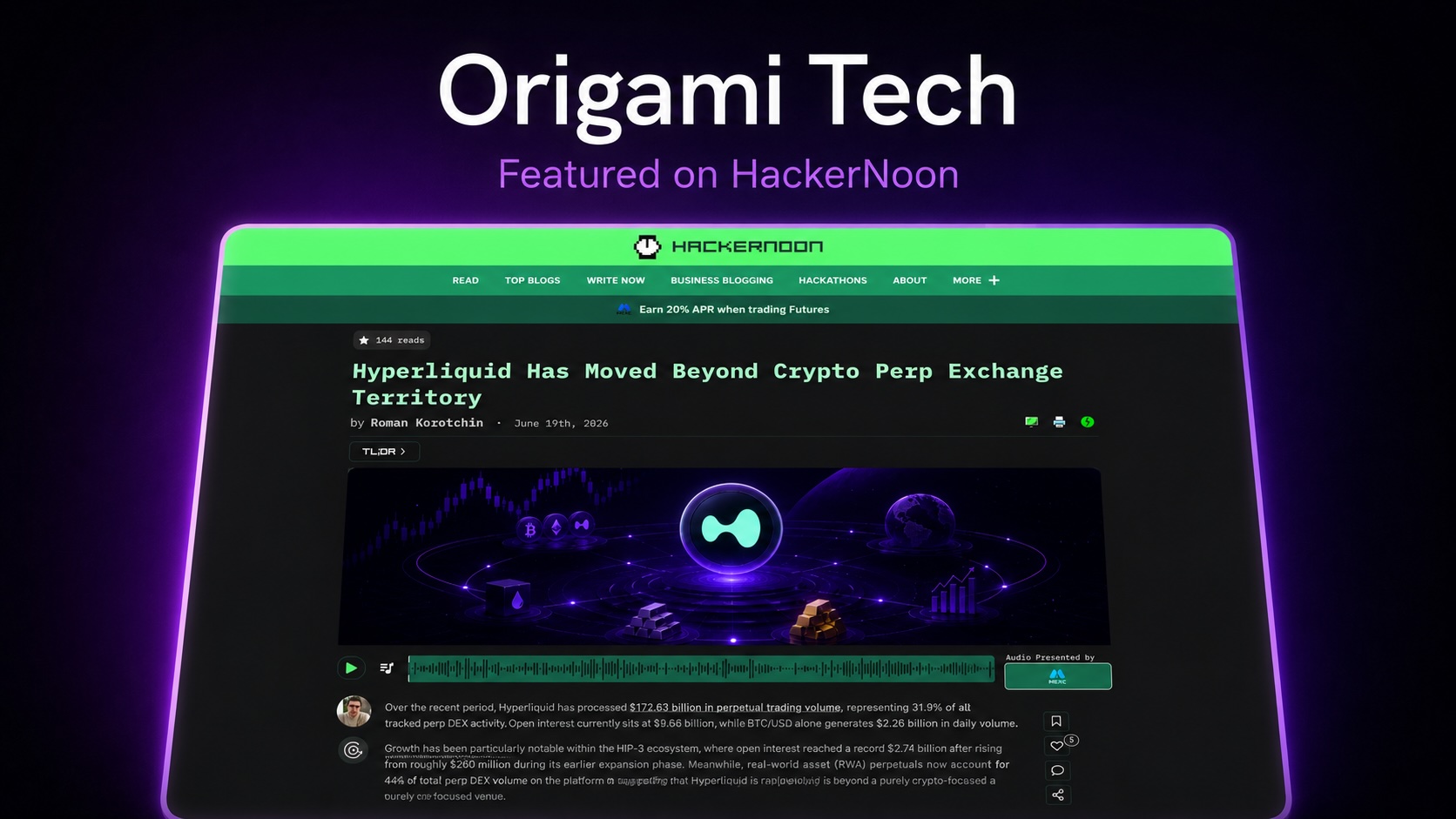

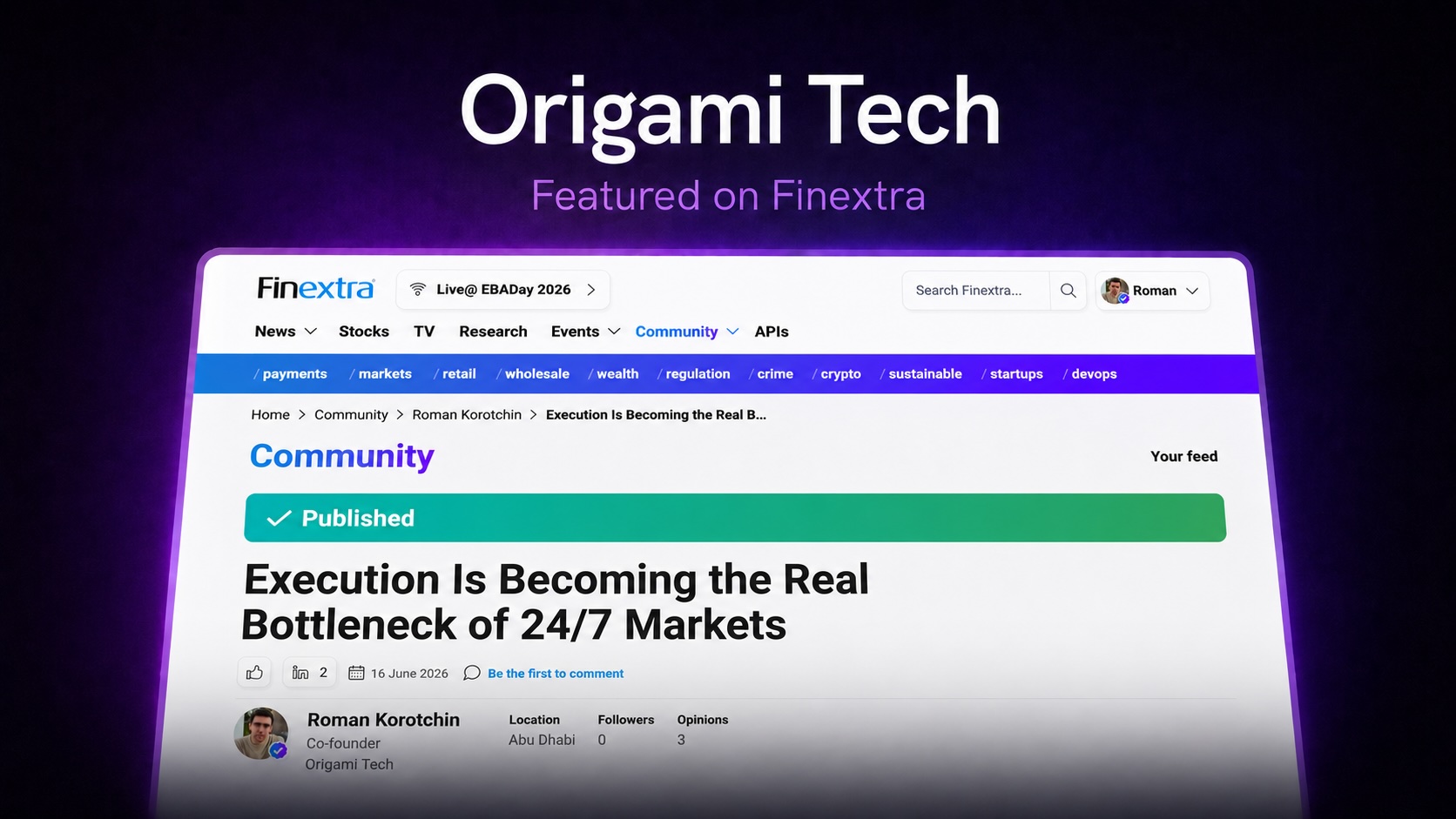

Discover Roman Korotchin’s expert insights on Finextra as he explores the rise of automated, multi-venue digital-asset trading and its impact on market evolution
.jpeg)
Trade Smarter with Origami Tech
Take your crypto trading to the next level with our powerful automated trading terminal. Maximize profits, minimize risks, and stay ahead of the market 24/7.