

Why Fake Volumes Threaten Real Markets
Introduction
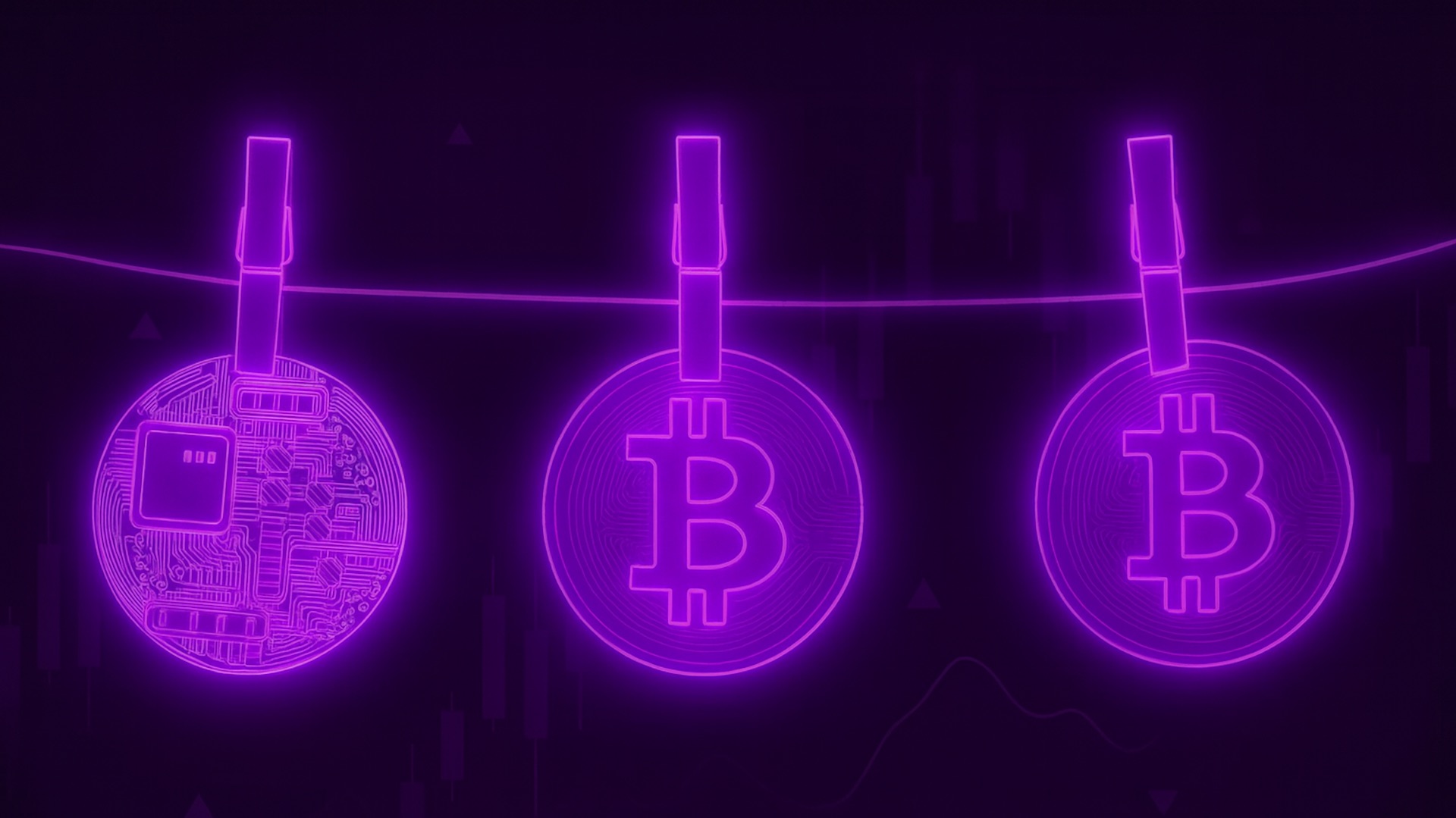
If you’ve been around crypto for a while, you’ve seen the hype around “record volumes.” Millions of daily trades and bottomless liquidity can look impressive at first glance. But those numbers are often an illusion. The practice behind it is called wash trading, where traders buy and sell the same asset back and forth to create fake market activity.
What Is Wash Trading
Wash trading is a manipulative practice in financial and crypto markets where a trader simultaneously buys and sells the same asset to create the illusion of organic trading activity. In reality, there is no actual change in position or risk. The trades only serve to artificially inflate trading volumes.
Compared to traditional markets, crypto is fast moving, fragmented, and less regulated. That makes it fertile ground for wash trading. From token projects trying to impress exchanges, to NFT projects seeking to pump floor prices, examples of manipulation abound. According to a 2025 study published on SpringerOpen, wash trading accounted for up to 24% of total trading volume across prominent NFT collections. In some cases, the share of wash trading reached as high as 93% of trading volume.
Projects and exchanges have plenty of motives for wash trading. Sometimes it’s pure marketing, as big volumes suggest popularity. Sometimes it’s strategic, because many exchanges demand that liquidity thresholds be met before approving new listings. For others, it’s price manipulation, an attempt to push the chart in a desired direction.
Main Purposes of Wash Trading
- Creating the appearance of liquidity
Exchanges or projects use the tactic to attract new traders or investors by showing “high activity” on their platform or for a particular token. - Price manipulation
Wash trading can be used to influence the market price of an asset, for example, driving the price up (a pump) or creating the illusion of consistent demand. - Earning rewards
On exchanges with incentive programs (e.g., rewarding high trading volumes), traders might use wash trading to artificially reach required volume thresholds.
Wash Trading by the Numbers
Chainalysis’s 2024 analysis suggests that suspected wash trades across Ethereum, BNB Chain, and Base accounted for $2.57 billion in a single year.
What’s more striking is who drives this activity. According to their research, just 10% of addresses accounted for 43% of suspected wash trading volume. One address alone executed more than 54,000 nearly identical buy-sell trades worth almost $17.3 million, illustrating how a handful of actors can distort entire markets.
Chainalysis also highlights that pump-and-dump schemes remain widespread. About 5% of new tokens launched in 2024 showed signs of being pump-and-dump projects, and only 1.7% of those tokens were still actively traded after 30 days. Rather than being directly linked to wash trading, these schemes represent another common manipulation strategy designed to create short-term hype and profit off of liquidity illusions.
Other findings reinforce this picture. For example, controllers using multi-sender services managed entire networks of addresses, with some overseeing more than 22,000 addresses and generating hundreds of millions in suspicious activity. In total, this “disperse-based” method accounted for around $1.87 billion of suspected wash trades.
For projects and traders, the takeaway is clear: inflated volumes and manufactured activity usually signal fragility rather than strength, and understanding these patterns is crucial for separating genuine growth from manipulative hype.
Why It’s So Damaging
Wash trading and pump-and-dump schemes do not just distort the numbers. They undermine trust. Artificial volumes create the illusion of liquidity and demand. This draws in unsuspecting investors who believe a project has real traction. When the illusion collapses, retail traders end up losing their shirts while manipulative actors walk away with profits.
The damage goes beyond individual portfolios. Inflated trading activity skews market signals that analysts, developers and even regulators use to assess risk and value. A token that appears hot because of wash trades may attract more listings or investments than it deserves. This diverts resources away from healthier projects.
Over time, repeated exposure to these schemes erodes confidence in the entire crypto ecosystem. Newcomers become wary of participating. Institutional players hesitate to commit capital. Regulators find more justification for stricter oversight. The result is a market that looks bigger on paper than it really is. In reality, it remains fragile, fragmented and prone to sudden shocks.
What Institutions Can Do About Wash Trading
Nasdaq highlights that one of the reasons wash trading continues to fly under the radar in crypto is the unique structure of the ecosystem: pseudonymous user identities, fragmented infrastructure across exchanges, and the sheer volatility of trading volumes.
To counteract this, financial institutions are encouraged to invest in three critical areas:
- Technology — advanced surveillance and analytics tools capable of detecting suspicious trades in real time.
- Processes — standardized workflows that ensure quick escalation and response when manipulation signals appear.
- Talent — skilled professionals trained to interpret complex data patterns and identify behavior consistent with market manipulation.
This framework aligns closely with the principles Origami Tech applies in its competitions: transparency, advanced analytics, and accountability. The goal is not only to discourage artificial volume, but also to build a sustainable market environment where genuine activity is rewarded.
Origami Tech’s Position: Only Real Trades Count
This is where Origami Tech draws a hard line. In Grid Leagues, our trading competitions, self-trading and artificial volume are strictly prohibited. We believe that fair competition only exists when every participant trades on equal terms, and that means only authentic activity is recognized. To ensure clarity, our rules are simple and transparent:
- Artificial volume does not count toward results
- Only genuine trades are eligible for rewards
- Participants with more than 20% of their trades identified as self-trading will be disqualified
- Offenders face permanent bans
Why so strict? Because the purpose of competitions is to stimulate real liquidity, onboard traders, and build communities that last. If fake numbers creep in, everyone loses: projects, partners, and especially honest traders.
How Origami Tech Detects Wash Trading
Origami Tech relies on a combination of safeguards that make it extremely difficult for artificial trades to slip through.
- Default self-trade prevention: Origami Tech actively employs this across all connected exchanges.
- API-based verification: every trade in a competition is tracked directly through exchange APIs. This ensures that only real executions on partner exchanges are counted toward results.
- Encrypted data flow: API keys are stored using modern encryption, which prevents tampering and guarantees the integrity of the trading records.
- Transparent leaderboards: results are updated in real time with data streamed from exchanges, leaving no room for manual input or fabricated volumes.
- Cross-exchange monitoring: activity is aggregated across multiple supported exchanges, making anomalies easier to spot when compared to normal market patterns.
- Behavioral analytics: Origami Tech systems track not just raw volume but also trading patterns, frequency of orders, and distribution of activity, which helps identify attempts at circular trading.
- Audit-ready architecture: all leaderboard data can be verified and matched against exchange-side records, giving both users and partners confidence that numbers are legitimate.
Together, these layers form a protective framework tailored for competitions, combining transparency with security.
Why Rejecting Wash Trading Matters
There is also a philosophical dimension to all of this. Markets only function properly when participants can trust the signals they see. Prices, volumes and spreads are numbers that reflect the collective actions of traders across the world. Wash trading distorts those signals and undermines the health of the entire system.
Crypto markets depend on trust more than any other financial environment. Without trust, adoption slows down, regulators impose tighter restrictions, and communities begin to fragment. Rejecting wash trading is therefore a matter of survival.
As the market matures, wash trading will become riskier, easier to detect and less tolerated. The future belongs to transparency and fairness. Origami Tech is committed to supporting that future by keeping the playing field clean.
You may also like



Trade Smarter with Origami Tech
Take your crypto trading to the next level with our powerful automated trading terminal. Maximize profits, minimize risks, and stay ahead of the market 24/7.